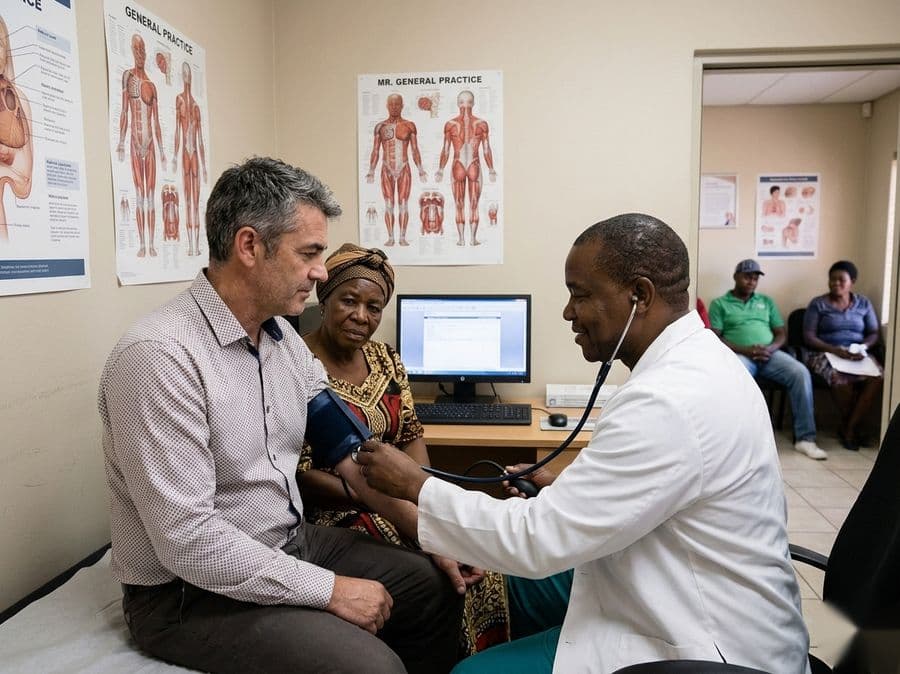
Colds and flu are not the same illness. Here is how to tell them apart, what genuinely helps at home, and the warning signs that mean you should be seen rather than wait it out.
South Africa's flu season generally runs from about April to September, peaking through the colder months. On the Highveld that overlaps with cold, dry air and more time spent indoors, which is a good arrangement for a respiratory virus and a poor one for the rest of us.
A cold and the flu are different illnesses
People use the words interchangeably, but the distinction is useful because it changes what you should expect and how carefully you should watch.
- A cold usually arrives gradually. Runny or blocked nose, sore throat, mild cough, and you generally feel able to carry on with the day. Fever is uncommon in adults.
- Flu usually arrives suddenly and hits harder — fever, aching muscles, headache, exhaustion, and a dry cough. The distinguishing feature is often less the symptom list than the speed and the flattening: people frequently remember the hour it started.
- Recovery differs too. A cold clears in under a week. Flu commonly takes one to two weeks, and the tiredness and cough can linger well after the fever has gone.
What genuinely helps at home
For an otherwise healthy adult with an uncomplicated illness, most of what helps is unglamorous.
- Rest, properly. Pushing through prolongs it and spreads it.
- Fluids. Fever and rapid breathing lose more water than people realise, and dehydration makes everything feel worse.
- Warm drinks, honey and steam for symptom relief — modest effects, but real ones, and no downside for adults and children over one year old.
- Staying home. This is the single most effective thing you can do for everyone around you, particularly if you live or work near someone elderly, pregnant or chronically ill.
Two things worth being clear about. Antibiotics do nothing for influenza or the common cold, because both are viral — taking them anyway will not shorten your illness and does contribute to antibiotic resistance. And antiviral medicines for flu exist, but they are prescription treatments that work only when started very early and are aimed mainly at people at higher risk. That is a decision for a doctor, not a pharmacy shelf.
Who should be more careful
Most people recover without complications. Some groups have a meaningfully higher risk of severe illness and should seek advice earlier rather than later.
- Adults over 65 and children under 2.
- Pregnant women.
- People with chronic conditions — asthma or other lung disease, heart disease, diabetes, kidney disease.
- People living with HIV, particularly if not on treatment or not virally suppressed.
- Anyone whose immune system is suppressed by illness or medication.
Vaccination
The flu vaccine is reformulated each year to match the strains expected in that season, which is why last year's does not carry over. It is most useful before the season builds rather than at its peak, and it is aimed particularly at the higher-risk groups above. It will not prevent every infection, but it reduces the chance of severe illness and hospitalisation — which is the outcome that matters.
Whether it is appropriate for you, and when to have it, is worth a short conversation with a doctor or nurse who knows your history.
If you would rather be seen
Ekhaya Medical Centre offers general consultations and vaccinations in Embalenhle, with a paediatrician on site for children and after-hours telemedicine when we are closed. If you are unsure whether what you have warrants a visit, that uncertainty is itself a reasonable reason to call and ask.