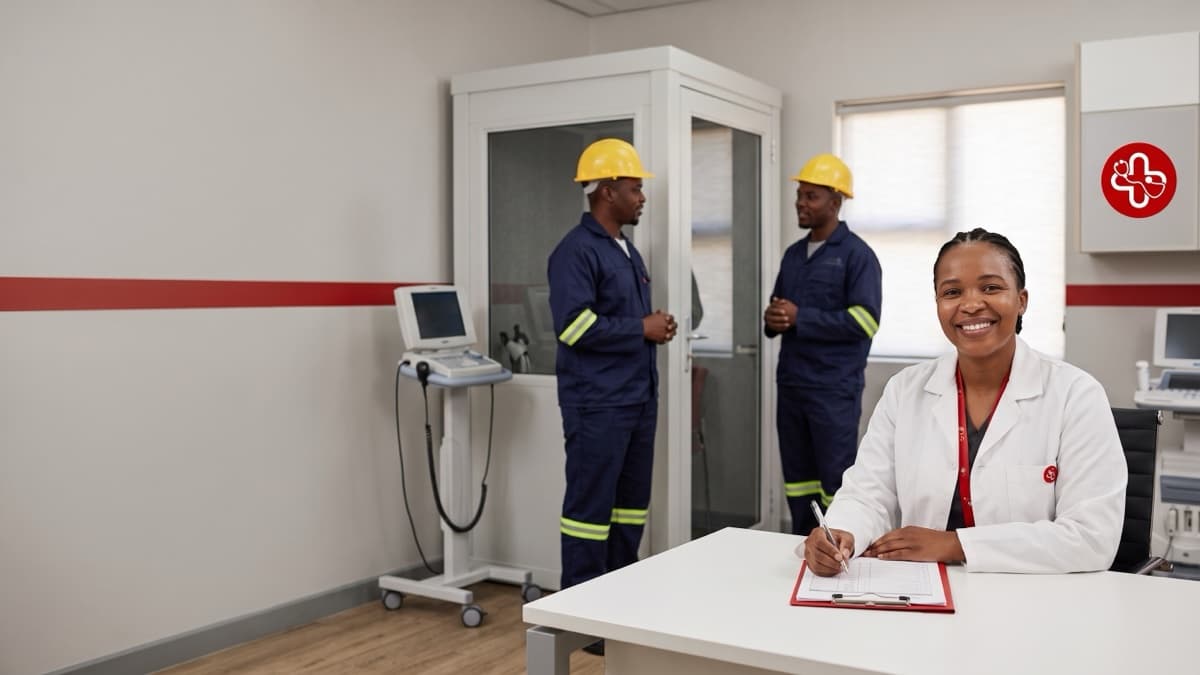
Baseline, periodic, exit and fitness-to-work examinations, what the OHS Act and Mine Health and Safety Act expect, and how to keep a workforce compliant without losing days to it.
If you employ people in Secunda, Embalenhle or anywhere across the Highveld industrial belt, medical surveillance is not optional paperwork. It is a legal duty, and in the event of an incident or a compensation claim it is among the first things an inspector asks to see.
This is a plain-language summary of what is generally required and what to expect. It is not legal advice, and the exact obligations depend on your sector and the hazards your people are actually exposed to.
Which law applies to you
Two main statutes govern workplace health in South Africa, and which one applies changes what you must do.
- The Occupational Health and Safety Act (OHSA) covers most industrial, commercial and construction employers. Its regulations — noise-induced hearing loss, hazardous chemical substances, asbestos, lead — each trigger their own medical surveillance duties.
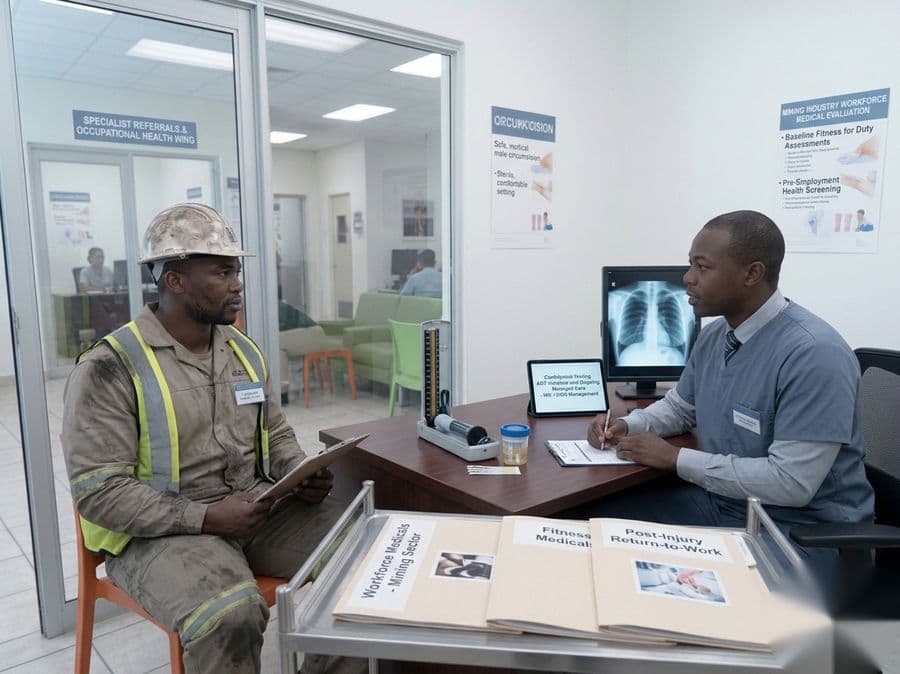
- The Mine Health and Safety Act (MHSA) covers mining operations and is stricter. It requires a documented medical surveillance system, an exit certificate for every employee who leaves, and a record of the risk each person was exposed to.
- COIDA sits behind both. It governs compensation for injury and occupational disease, and a claim is far harder to defend or support without baseline records.
The four examinations, and what each is for
Most surveillance programmes are built from four examination types. They are not interchangeable.
- Baseline (pre-employment): performed before exposure begins. This is the reference point every later test is measured against — without it, you cannot show whether a hearing loss or lung change happened on your watch or before it.
- Periodic: repeated at a set interval, usually annually, sometimes more often for high exposure. Its purpose is to catch change early, while it is still reversible or containable.
- Exit: performed when someone leaves. Under the MHSA this is mandatory. It closes the record and is the single most useful document an employer can hold if a claim arrives years later.
- Fitness-to-work: task-specific rather than time-based. Can this person safely work at height, in a confined space, in heat, or drive this vehicle? Triggered by the job, or by a return after illness or injury.
The tests that usually sit inside them
What a medical actually contains depends on exposure. A worker in a noisy plant and an office-based supervisor should not receive the same examination — and if they do, the programme is not risk-based.
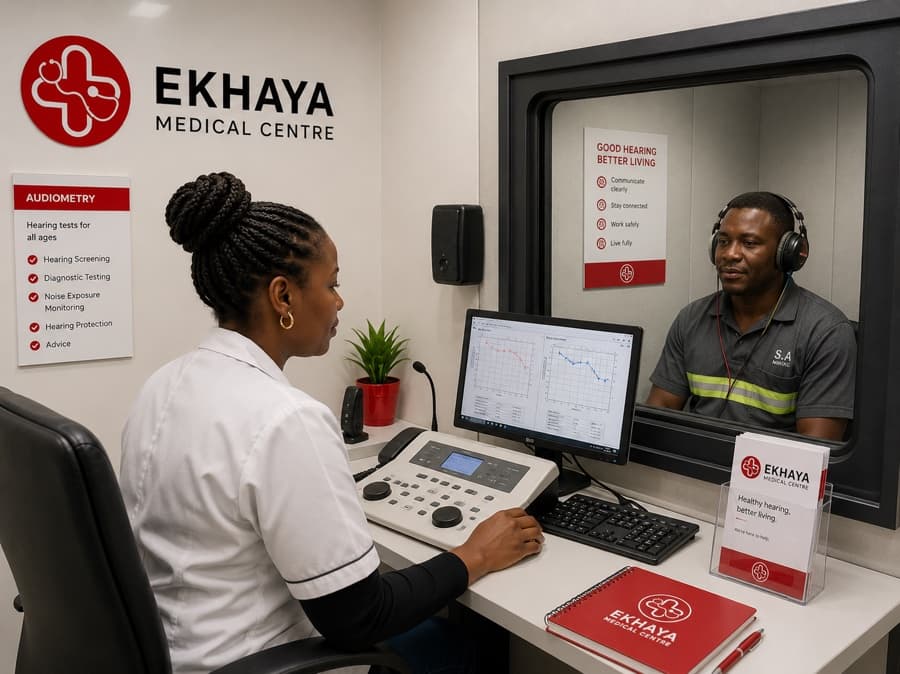
- Audiometry, where noise exposure is at or above the action level. Baseline plus annual testing is the standard pattern, and it is the test most often skipped and most often regretted.
- Spirometry (lung function), where there is dust, fume or chemical exposure.
- Vision screening, for drivers, machine operators and anyone doing safety-critical visual work.
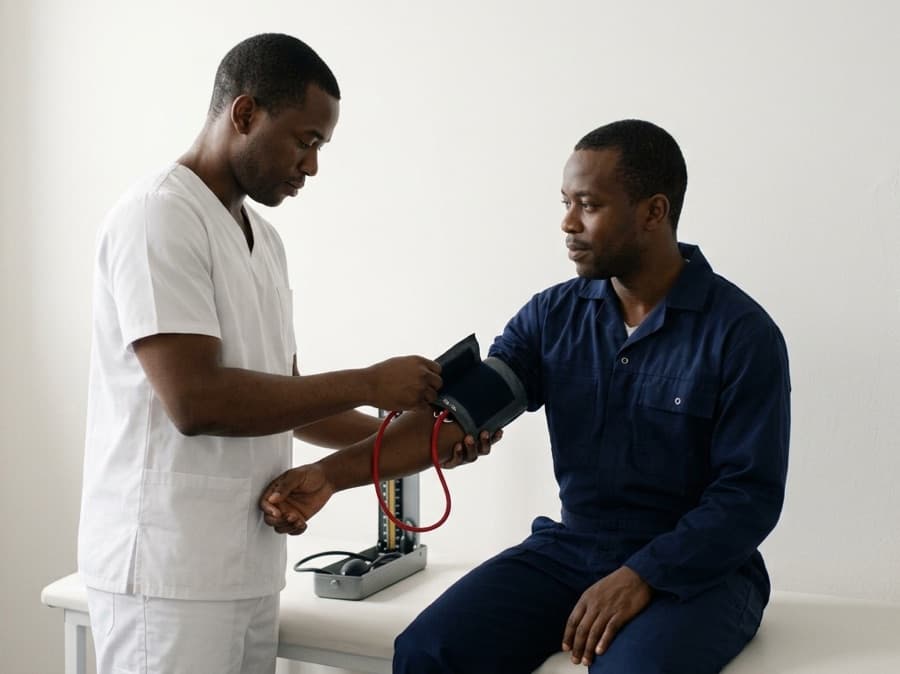
- General clinical examination and blood pressure, which frequently picks up untreated hypertension or diabetes that has nothing to do with work but a great deal to do with whether someone is fit for it.
- Drug and alcohol screening, where the employer's policy provides for it.
Professional Driving Permits
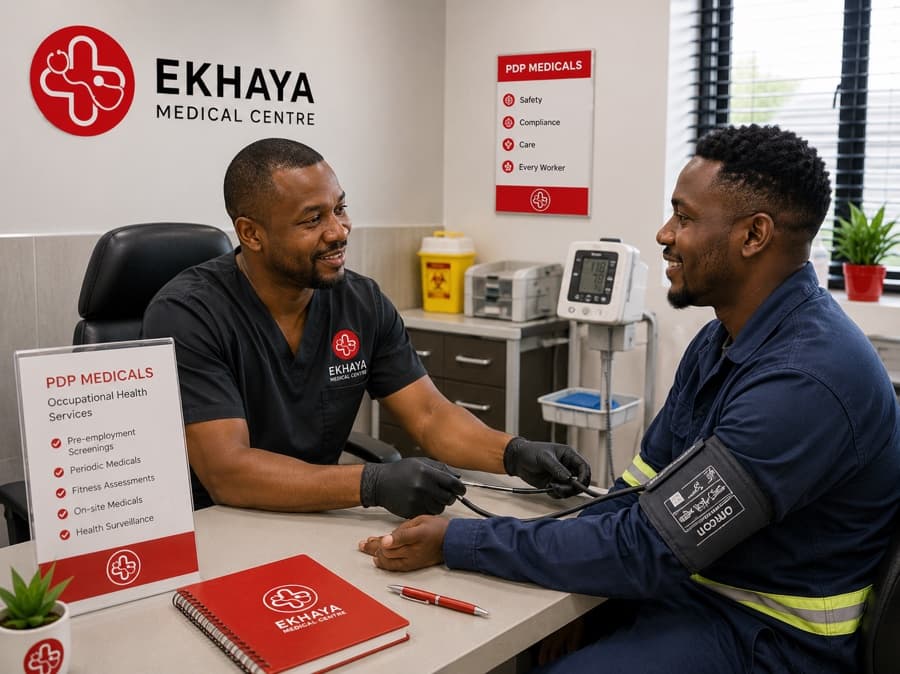
A PDP medical is a separate, specific examination required before a professional driving permit is issued or renewed. It covers vision, hearing, general health and any condition that could cause sudden incapacity at the wheel. If your operation runs vehicles, this sits alongside — not inside — your surveillance programme, and permits expire on their own schedule.
What good record-keeping looks like
The examination is only half the obligation. The record is the other half, and it is the half that fails most often.
- Keep records for the period your sector requires — occupational health records are typically retained for decades, not years, because occupational disease can present long after exposure ends.
- Keep the exposure history alongside the medical result. A hearing test with no record of what the person was exposed to answers half a question.
- Give the worker their result. It is their health information, and under POPIA they have a right of access to it.
- Store it securely. Medical records are special personal information under POPIA and cannot sit in an unlocked filing cabinet or a shared drive.
How we can help
Ekhaya Medical Centre runs occupational health services from Ekhaya Mall in Embalenhle, which puts us within easy reach of the Secunda industrial area rather than a long drive from it. We handle pre-employment and baseline medicals, periodic and exit examinations, fitness-to-work assessments, audiometry screening and PDP medicals, and we can put together a schedule for a workforce rather than booking people in one at a time.
If you are starting a programme from nothing, or you have inherited one you are not confident in, contact us and we will work through what your exposures actually require.