Two of the most common conditions in South Africa, and two of the most commonly undiagnosed. What the numbers mean, why treatment is lifelong, and the mistakes that cost people the most.
High blood pressure and type 2 diabetes are among the most common conditions treated in South African primary care, and among the most frequently missed. Both can run for years without a symptom worth mentioning, which is precisely what makes them dangerous: by the time something feels wrong, the damage being done has usually been under way for a long time.
This is general information about what these conditions are and how they are managed. It is not a treatment plan — those are individual, and they belong to you and your doctor.
Why "silent" is the problem
Neither condition hurts in its early stages. Blood pressure can sit high for a decade while you feel entirely well, quietly straining the heart, kidneys, eyes and the blood vessels supplying the brain. Raised blood sugar behaves the same way. The harm is cumulative and it is largely invisible until it is not.
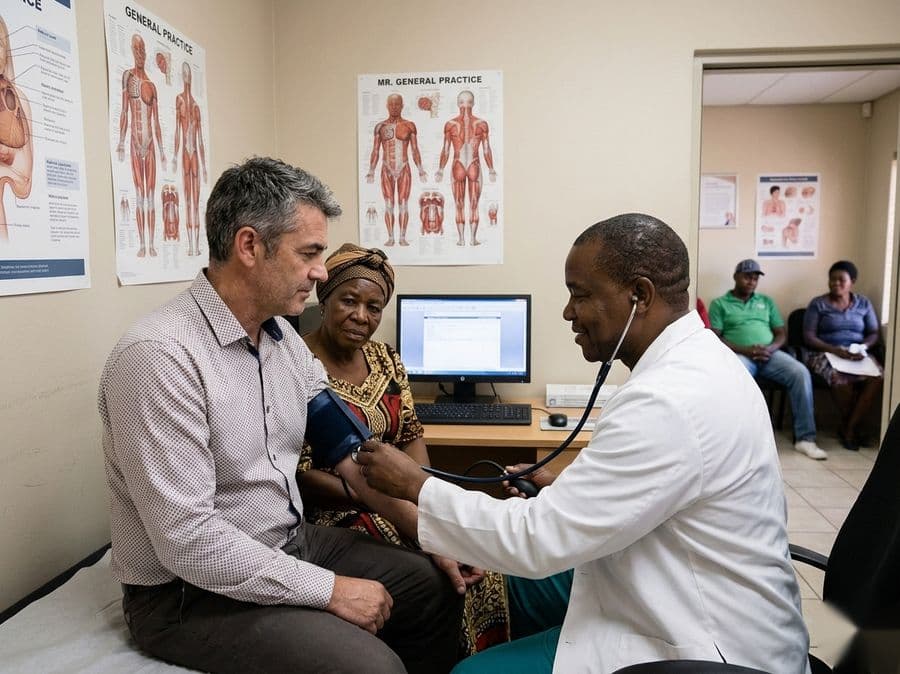
This is why screening matters more here than almost anywhere else in medicine. A blood pressure reading takes under a minute and a finger-prick sugar test not much longer. Neither requires you to feel ill first, and both are worth doing even when you feel fine — particularly if a parent or sibling has either condition.
What the numbers actually mean
Patients are given numbers constantly and rarely told what they represent, which makes them easy to dismiss.
- Blood pressure is written as two numbers, for example 130/80. The first is the pressure as the heart beats, the second the pressure as it rests between beats. Both matter, and a single high reading is not a diagnosis — it is a reason to measure again properly.
- HbA1c is a blood test reflecting your average blood sugar over roughly the previous three months. Unlike a single sugar reading it cannot be improved by being careful for one morning, which is exactly why it is used.
- Targets are individual. A sensible target for a fit 40-year-old is not the right target for someone of 75 with heart disease, and chasing a number that is wrong for you can do real harm.
Treatment is ongoing, not a course
The single most common and most costly misunderstanding is that these medicines are a course of treatment. They are not. Blood pressure tablets do not cure high blood pressure — they control it, and control ends when they stop.
People very often stop because they feel well. That is the medicine working. Others stop because of side effects, or because a repeat prescription ran out at an awkward time, or because money was short that month. All of those are real, and all of them are worth saying out loud to your doctor, because in most cases something can be changed — a different tablet, a different dose, a different schedule. What cannot be worked around is a doctor who does not know you have stopped.
What genuinely helps alongside medication
None of this replaces treatment, but the effect is real and it is measurable at the next visit.
- Reducing salt. Most dietary salt is not from the shaker — it is in bread, stock cubes, soup powders, processed meats and snacks. Reading labels achieves more than removing the salt cellar.
- Moving regularly. Brisk walking most days is genuinely enough; this does not require a gym.
- Losing a modest amount of weight if you carry extra. Even five to ten percent measurably improves both blood pressure and blood sugar.
- Cutting down on alcohol, and stopping smoking. Smoking multiplies the cardiovascular risk that both conditions already carry.
- Taking your tablets at the same time each day. Attaching them to something you already do without fail is more effective than intending to remember.
The checks that should happen regularly
Good chronic care is not only about prescriptions. Ask whether these are being done and when they are next due.
- Blood pressure at every visit, and blood tests for sugar, cholesterol and kidney function at intervals your doctor sets.
- Feet checked for sensation and for wounds, if you have diabetes. Nerve damage means an injury can go unnoticed until it is serious.
- Eyes screened regularly. Both conditions damage the small vessels of the retina, and early change is treatable while it causes no symptoms.
- A review of every medicine you take, including anything bought over the counter or from a traditional healer — interactions are common and easily missed.
How we help
Ekhaya Medical Centre runs chronic disease management in Embalenhle: diagnosis, medication, regular monitoring and the blood tests that go with it, with dietetics and medically supervised weight management on site when those would help. Seeing the same practice over time is the point — trends across years are what these conditions are actually managed on.
If you have not had your blood pressure or sugar checked in the last year, that is worth a short visit even if you feel completely well.